Hot Tub Electrical: 220V Circuits, Subpanels & More
Adding a hot tub? Learn when you need a 220V circuit, an indoor subpanel, or an outdoor panel so your new spa is safe, code-compliant, and ready to enjoy.
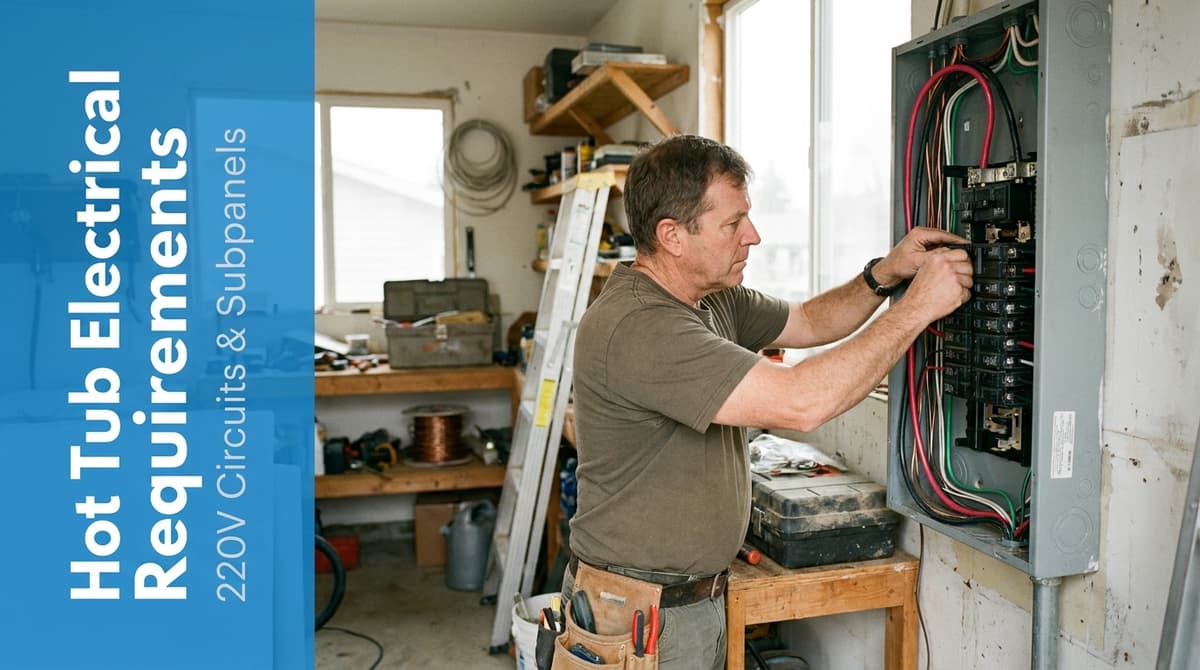
A Hot Tub Plan Starts With a Simple Question: 110V or 220V?
We recently got a call from a homeowner — let's call her Emily — who we’d helped a few months earlier by adding some outlets in her basement. This time, she said, “We’re thinking about putting in a hot tub. Do you do the wiring for that? I think I need a 220.”
That’s a call we get a lot. A new spa on the patio sounds simple, but the electrical side can get confusing fast: 110 vs. 220, 50 amps, subpanels, outdoor panels, disconnect boxes…it’s a lot to sort through when you just want to relax in some hot water.
Using Emily’s situation as an example, let us walk you through how we think about the electrical requirements for adding a hot tub — and when you might need a 220V circuit, a subpanel, or even an outdoor panel.
When Your Hot Tub Needs a 220V / 240V Circuit
On the phone, Emily told us, “I think I need a 220.” Most modern full-size hot tubs are actually 240V (people still call it 220 out of habit), and they commonly require a 50-amp dedicated circuit. But the first thing we always ask is:
- Do you have the manufacturer’s specs?
Those specs tell us exactly what the tub needs: voltage, amperage, and any special requirements. In most cases, you’ll see something like:
- Voltage: 240V
- Breaker size: 40A–60A (50A is common)
- Dedicated circuit: Required (no sharing with other loads)
- GFCI protection: Required by code for safety
Some smaller “plug and play” hot tubs can run on a regular 120V outlet, but they usually:
- Heat more slowly
- May not be able to run the heater and all jets on high at the same time
- Still have strict GFCI requirements
If you’re investing in a larger spa or want the full performance, plan on a 240V, 40–60A dedicated circuit.
Can Your Existing Panel Handle a Hot Tub?
While we were talking, Emily mentioned, “I think we only have one spot left on the panel.” That’s another common situation. There are really two questions we look at:
- Is there physical space for the new breaker? (How many open slots are left?)
- Does the panel have enough capacity? (Can it safely handle the added load?)
Even if there’s one space left, a 50A hot tub circuit is a big load to add. We’ll often recommend:
- A load calculation to check if your main service and panel can support the additional amperage
- Looking ahead at any other upgrades you might want down the road (EV charger, workshop, more outdoor lighting, etc.)
If the panel is tight on space or capacity, that’s when we start talking about subpanels.
When an Indoor Subpanel Makes Sense
On our call with Emily, her husband had floated the idea of “adding another panel and making all the outside stuff be on that panel.” That’s basically what an indoor subpanel is: a smaller panel fed from your main panel.
We usually suggest an indoor subpanel when:
- Your main panel is nearly full, but your overall service can handle more load
- You want a cleaner, more organized way to add several new circuits
- You might add more loads in the future (outdoor kitchen, landscape lighting, shed, EV charger, etc.)
An indoor subpanel is typically mounted near your main panel inside the house or garage. From there, we can run the hot tub circuit out to the yard and still leave space for future projects.
When an Outdoor Panel or Spa Panel Is Better
We asked Emily if they were planning to add more outdoor circuits in the future. At the moment, she thought it would be just the hot tub, but this is where we think long-term.
We often recommend an outdoor panel (or dedicated spa panel) when:
- The hot tub is far from the main panel, and future outdoor loads are likely
- You want easy access to breakers outside for things like a pool, lights, or a pergola
- Code requires a nearby GFCI disconnect for the hot tub
For many hot tub installations, we’ll install a GFCI spa disconnect on the exterior wall, typically:
- Within sight of the hot tub
- But at least 5 feet away from the water (per code)
In more complex yards — pools, multiple seating areas, landscape lighting, outlets — a small outdoor panel acts as a convenient hub so we’re not running a dozen long circuits all the way from your main panel.
Complexity and Cost: Simple Circuit vs. Subpanel vs. Outdoor Panel
Homeowners often ask which option is “cheapest.” We don’t quote pricing in a blog post, but we can explain the relative complexity of each setup:
1. Simple 240V Hot Tub Circuit
This is usually the least complex option when:
- Your main panel has room
- The panel has enough capacity
- The hot tub is fairly close to the house
We run a dedicated 240V line from the panel to a GFCI spa disconnect, then to the tub. Fewer materials and less labor than the other options.
2. Adding an Indoor Subpanel
More complex than a single circuit because we’re:
- Installing a new panel
- Feeding it from your main panel with a larger feeder cable
- Then adding the hot tub circuit off the subpanel
The upside is you gain future capacity for other projects, so it can be more cost-effective over time.
3. Adding an Outdoor Panel
This is usually the most complex — similar to an indoor subpanel but mounted outside, often requiring:
- Weatherproof equipment and enclosures
- Longer wire runs
- More planning for future outdoor loads
For busy backyards or pool areas, though, the convenience and flexibility can make it absolutely worth it.
Hot Tub Electrical FAQ: What Homeowners Ask Us Most
“Can I reuse an old hot tub circuit?”
Sometimes. We need to verify that the existing wiring, breaker size, and GFCI protection all match the new tub’s specs. Many older circuits used different wire sizes or breaker ratings, so we always check before reusing anything.
“How long does installation usually take?”
Most straightforward hot tub installs are done in half a day to a full day. More complex jobs — long wire runs, subpanels, trenching — can take longer. We typically do a site visit first (like we scheduled with Emily) so we can give you a realistic timeframe.
“Do I need permits or inspections?”
In most areas, yes. Electrical work for a hot tub typically requires a permit and inspection. We handle that process for our customers, make sure the work meets code, and coordinate any required inspections with the local authority.
Planning a Hot Tub? Here’s How to Get Started
If you’re thinking about adding a hot tub, the easiest first step is the one Emily took: give us a call before you buy. If you already have a model picked out, we’ll ask for the specs. If you’re still shopping, we can give you a sense of what your home’s electrical system can handle and what to plan for.
From there, we can:
- Look over your main panel and service capacity
- Talk through whether a simple circuit, indoor subpanel, or outdoor panel makes the most sense
- Plan the safest, cleanest route for wiring and the GFCI disconnect
The goal is simple: when your hot tub is delivered, you’re ready to fill it, power it up, and start relaxing — with wiring that’s safe, code-compliant, and built to handle not just tonight’s soak, but all the evenings to come.